
Home »
About IUDs
About IUDsAn IUD is a small plastic device
that is inserted into the uterus to prevent pregnancy. The IUD is an
easy, convenient, highly effective form of contraception that does not
interfere with spontaneity. The IUD requires no daily attention,
however, you should check it's placement after each period. It must be
inserted and removed at any time by a healthcare professional. It can be
removed at any time and fertility resumes immediately.
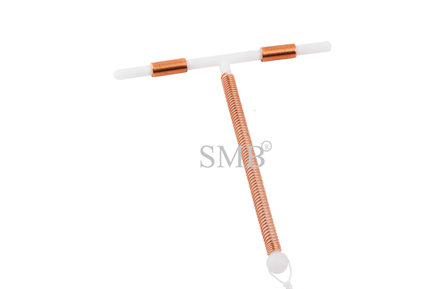
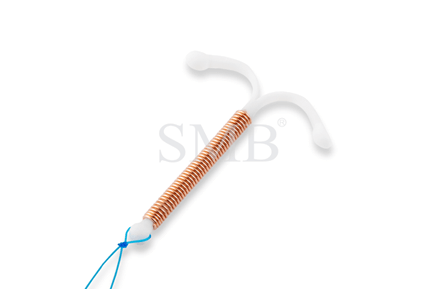
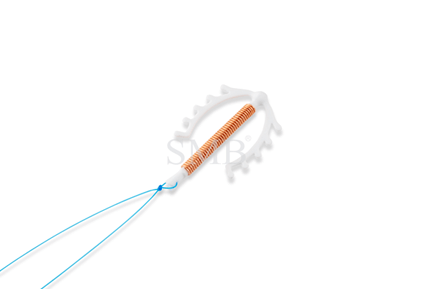
IUD technology has come a long way since the first plastic IUDs appeared on the scene in the 1960s. The first copper bearing IUDs Copper -7, TCu-200 and Nova T appeared in the early 1970s, but they required replacement every two or three years. Further research discovered that adding larger quantities of copper to the plastic produced an IUD that was more effective and caused less bleeding problems. Today a small plastic device wrapped in copper with strings attached can sit quietly in womans uterus providing a high degree of largely trouble free protection against pregnancy year after year for ten years is indeed, something to sing about. Presently there are two IUD options. One has a copper band around the IUD. It can stay inside the body for up to 10 years. The other contains a small amount of the hormone progesterone which increases it's effectiveness and reduces side effects, and it must be replaced annually. Mechanisms
of action
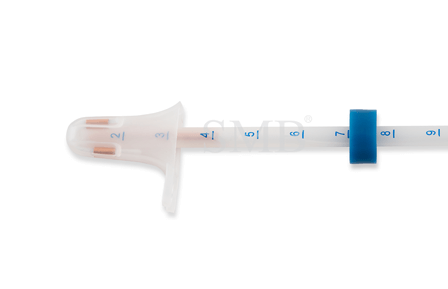
Various hypotheses have been advanced over the years about the mechanisms of action of IUDs, including interference with sperm transport, ovum transport or development, fertilization and implantation. Until about 1980, it was believed that the IUD worked mainly by causing an inflammatory response to a foreign body in the uterus, thereby interfering with implantation of a fertilized egg in the uterine wall. The informed consensus now has changed. Studies support the conclusion that Copper IUDs prevent fertilization by reducing the number and viability of sperm reaching the egg, and by impeding the number and movement of eggs into the uterus. It is believed that the continuous release of copper from the coils and sleeves of the Copper T 380A into the uterine cavity enhances the contraceptive effect of the IUD. Effectiveness The annual pregnancy rate of users of the Copper T 380A is well below one per 100, within the range of implantable and injectable contraceptives and surgical sterilization. In actual use during the first year, the Copper T 380A IUD is more effective than most other IUDs, oral contraceptives, condoms, and barrier methods. The data in the US FDA labeling show cumulative pregnancy rates at three, five, and eight years of 1.5, 1.9, and 2.3 per 100 users respectively. The effectiveness of the Copper T 380A IUD was found to be related to age, with pregnancy rates decreasing for older women. Duration of effectiveness The US Food and Drug Administration first approved the Copper T 380A in 1984 for a duration of four years. In 1989, based on data submitted by the Population Council from its and WHO studies, the FDA extended the period of efficacy to six years. On the basis of further data, in 1991 the US FDA approved use of the Copper T 380A for eight years and in 1994 the period of use was extended to ten years. The ten-year duration applies to the Copper T 380A IUD governed by US FDA labeling. Approvals by regulatory agencies in other countries may apply to different models, and may stipulate different durations of effectiveness. Long term studies shown that the TCu-380 A is effective for at least 12 years after insertion. Timing of insertion The copper T 380A IUD may be inserted at any time during the menstrual cycle, provided the women is not pregnant and has been consistently using an effective contraceptive since her last menses. Many clinicians prefer to insert an IUD within seven days of the onset of menstruation because the cervical opening is slightly dilated during this time, making insertion easier and pregnancy very unlikely. Insertion during these days also is likely to result in less discomfort, cramping, and spotting for the patient. The Copper T 380A IUD may be inserted immediately after an uncomplicated first-trimester miscarriage or an induced abortion. A provider must ensure that time is available for counseling and appropriate STD screening. Shelf life The shelf life of the Copper T 380A IUD is seven years. If the date on the individual IUD sterilized packaging has expired, the device and its inserter should be discarded. Continuation rates Continuation rates of IUD use have been generally among the highest of all reversible contraceptives. Data from the clinical studies carried out by SMB indicate that 96.46 percent of women continued using SMB Copper T 380A for 12 months. 86.73 percent of the women continued for more than 24 months and there were no cases recorded being pregnant when using the device. Prevalence of Use Worldwide, the IUD is the most widely used reversible contraceptive. IUD use varies from country to country, reflecting differences in culture, availability, and choice of contraceptives, attitudes and training of providers, and fertility goals of women. In Scandinavia, 20 to 40 percent of contraceptive users have IUDs, while about 60 million Chinese women use IUDs. Return of fertility The contraceptive effect offered by the Copper T 380A IUD is reversed when the device is removed. Conception rates following removal for planned pregnancy are normal, with rates of successful planned pregnancy unaffected by duration of IUD use. Tarnishing of Copper Copper-bearing IUDs may show discoloration in their sterile packaging, but this should not cause alarm. The copper tarnishes because air passes through the sterile IUD package, causing an oxide or sulfide film to form on the surface. IUD packaging has to be permeable to sterilize the devices. If the package is not damaged, and the expiration date on the package has not passed, the IUD will be sterile even if the copper on the device is tarnished. Laboratory studies show the tarnishing does not affect the safety or effectiveness of the IUD. Failure Rate Pregnancy with the copper T 380A in place occurs at rates of less than one per 100 women per year. If a woman using an IUD becomes pregnant, the IUD should be removed immediately. Special Features Conventionally
Cu Ts are wound using copper wire. The copper wire is wound on the
Cu T stem under specified tension to ensure correct and uniform winding.
In single copper winding system one end of the copper wire is led
through the hole in the Cu T stem and is bent downwards. The winding is
then done over this bent end to create as anchor for winding. This anchoring of one end by winding wire over the other end represents a critical step and any loss of anchoring can result in low-tension winding and pitch variations. Any loosening of wire from this end can result in complete unwinding of copper wire. This form has a region of overlap of the wire spiral over a variable length of wire. The spiral gets angulated over the straight wire length. During winding wire tension varies over in this zone with differing wire stretch. As a consequence of the overlap and varying tension this region is susceptible to enhanced corrosion and the wire end can also protrude. This situation represents a potential danger to the user. SMB
Corporation has overcome this major disadvantage by adopting a new form
of winding using Programmable Logic Controller Technology. The double
winding form intrinsically rules out the possibility of protrusion. In
this winding, the copper wire is pulled through the stem hole till the
stem is midway along the wire length. The winding is then done using two
strands on either side of stem hole. The double copper winding system
does not have overlap and does not form electrochemical cells. The
corrosion effect from the electrochemical action is much less.Double copper winding system has a definite advantage over the single winding system. Advantages of Double Copper Winding are :
|
||||||||||||||||||||||||